Optimised & User-friendly Solutions
Vapogant digestate evaporation: Efficient processing of digestate
Fermentation residue evaporation
The Vapogant digestate evaporation system from Biogastechnik Süd processes digestate from your biogas plant into valuable, highly concentrated fertilisers, including ammonium sulphate (farmAS®) and concentrated liquid fertiliser (farmLC®). The 100% closed system operates emission-free, odour-free and with heat recovery. It saves up to 70% of digestate storage volume, reduces transport journeys and maximises nutrient efficiency. Modular in design and easy to integrate into existing plants – get advice now.
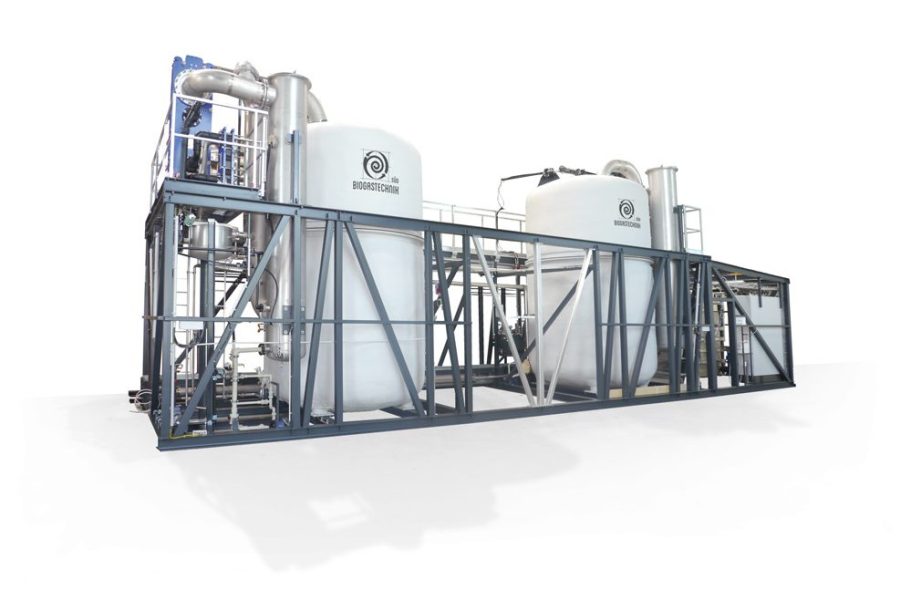
Vapogant 1-stage
Vapogant 2-stage
Vapogant BV
Download the full brochure
The process
The process of digestate evaporation comprises several steps:
1. Mechanical separation: Fermentation residues are separated into liquid and solid phases using a sieve. The solid material is temporarily stored and can be used as fertiliser.
2. Heating and vacuum evaporation: The liquid phase is heated and placed under vacuum, causing it to partially evaporate and thicken. This takes place in an energy-efficient process that utilises heat recovery.
3. Vapour scrubber: The gas phase is treated with sulphuric acid to convert ammonia into ammonium sulphate, which is stored separately.
4. Condensation and cooling: The remaining vapour is condensed into water and the recovered heat is reused. The distillate is cooled and used as a coolant.
5. Vacuum generation and gas recirculation: A vacuum pump generates the required vacuum and recirculates escaping gases back into the biogas plant.
6. Discharge of the concentrate: The thickened concentrate is finally discharged in a vacuum-sealed manner and contains all nutrients except ammonia, which is stored as ammonium sulphate.
The plant has a modular design and has an evaporation capacity of up to 2.5 litres per kW therm, depending on various operating conditions.
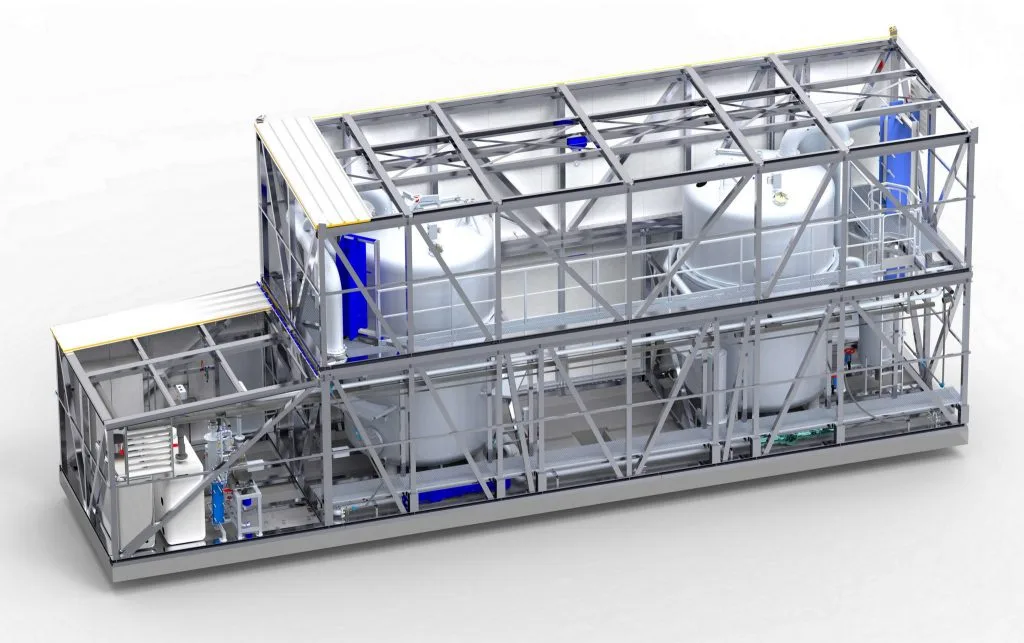
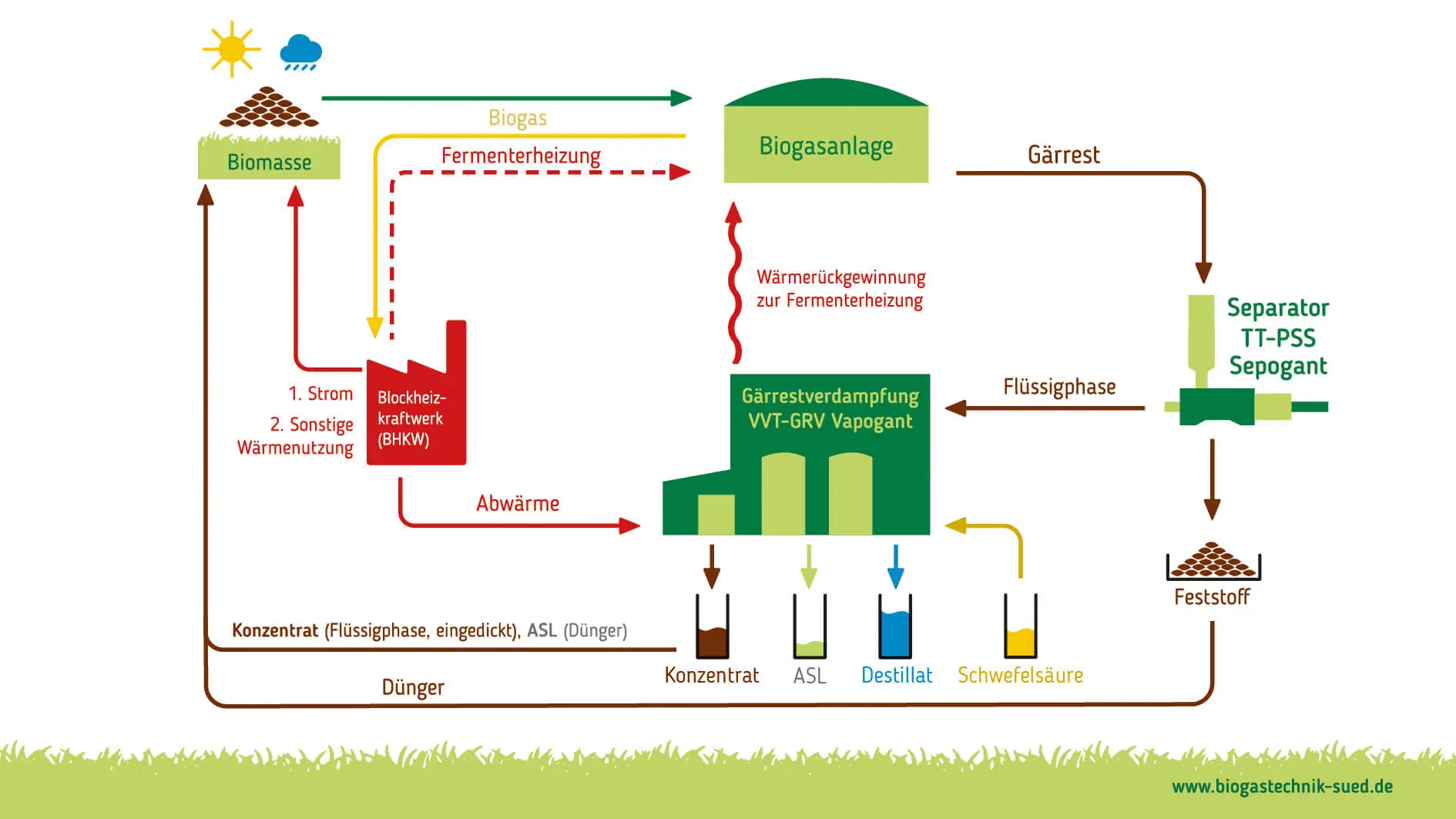
Vapogant fermentation residue evaporation cycle
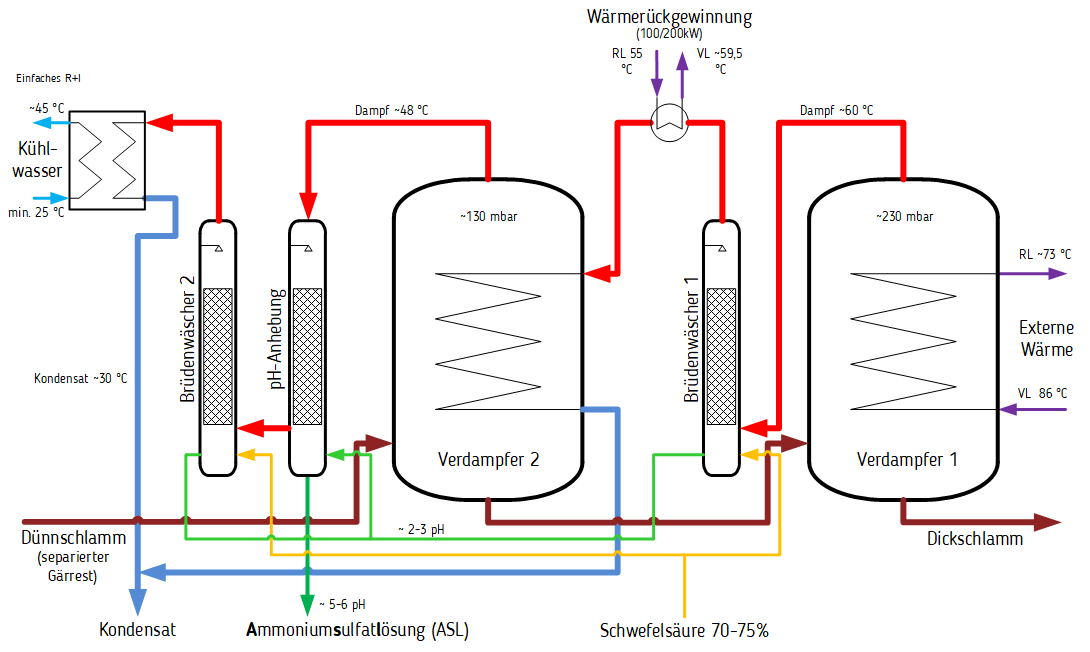
Technical process of Vapogant fermentation residue evaporation
What can the Vapogant digestate evaporator do? An overview of the benefits
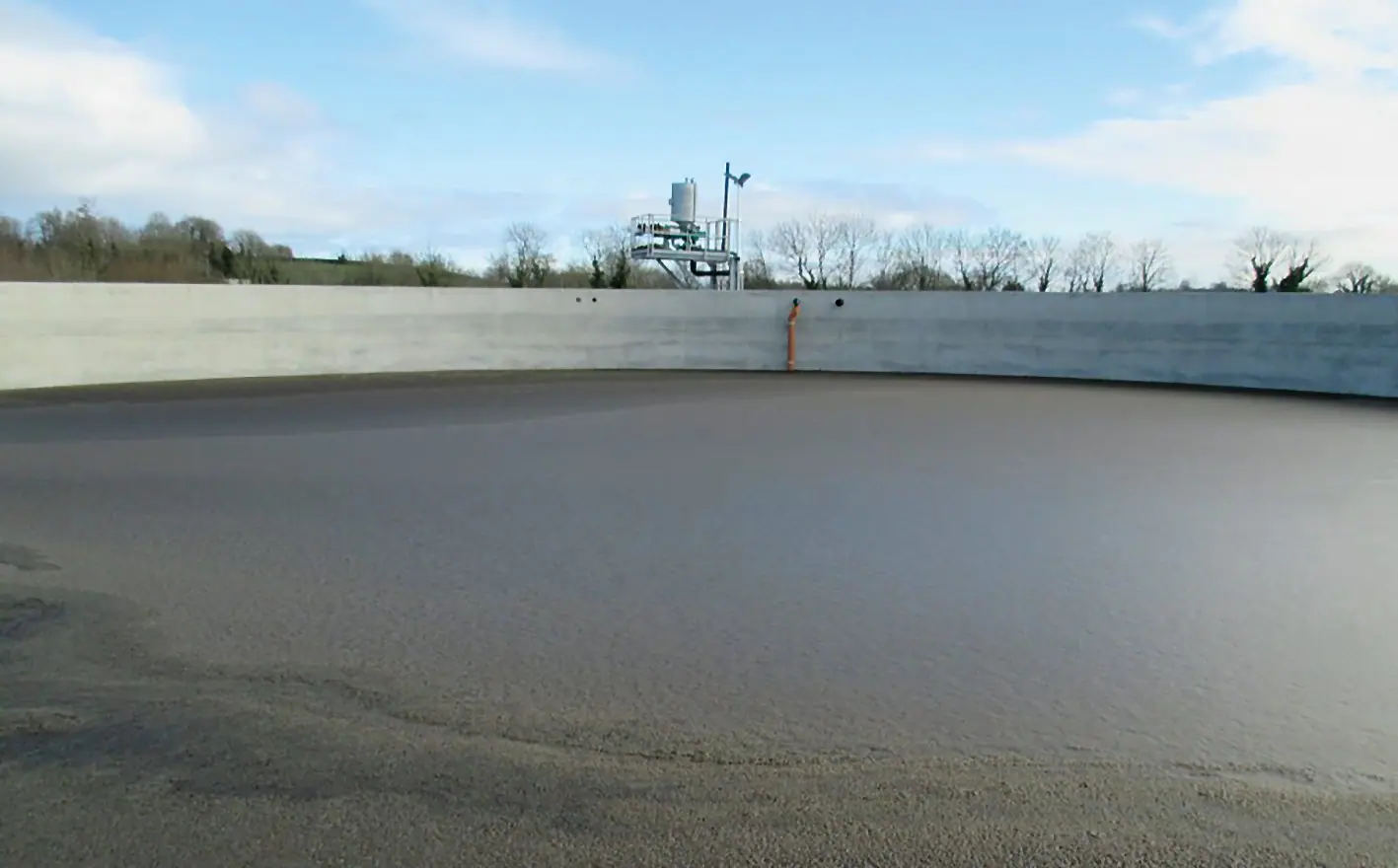
Storage
- The concentrated fermentation residue has a significantly lower
volume and saves up to 70 per cent of digestate storage capacity - Digestate evaporation as an alternative to the construction
of additional digestate storage facilities - Following amendments to the AwsV and the Fertiliser Ordinance
there is no longer a problem with digestate storage - Significant thickening of the liquid phase
- possibly no need for the Major Accidents Ordinance
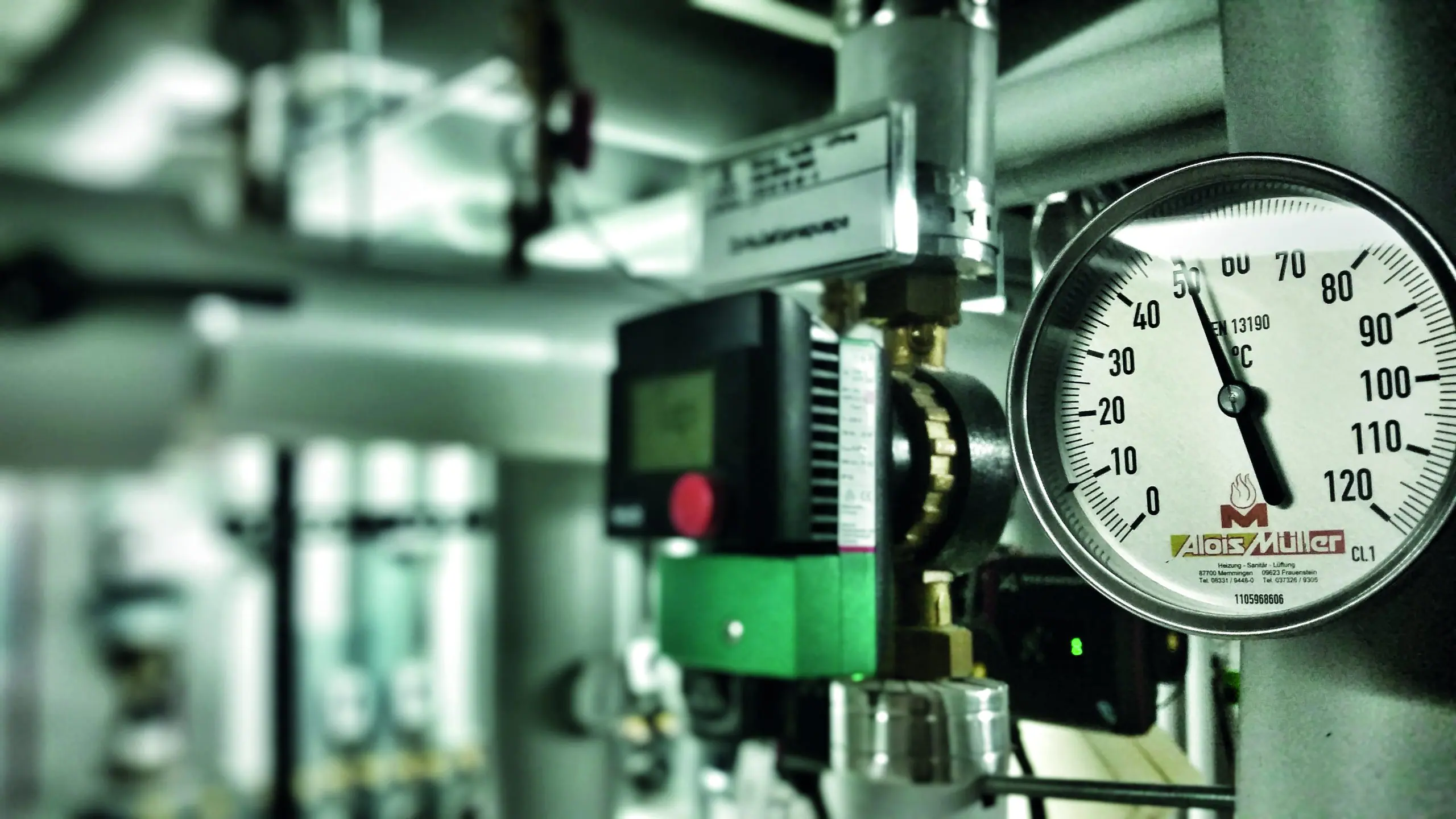
Heat utilisation
- Efficient use of heat that makes sense all year round
- Guaranteed CHP bonus through efficient fertiliser production
- Easy integration into existing plants
(even with partial heat utilisation) - Multiple utilisation (multi-stage) via a vacuum system
- Heat recovery:
1. Evaporation 2. Fermenter heating - Automatically controlled 100% heat utilisation
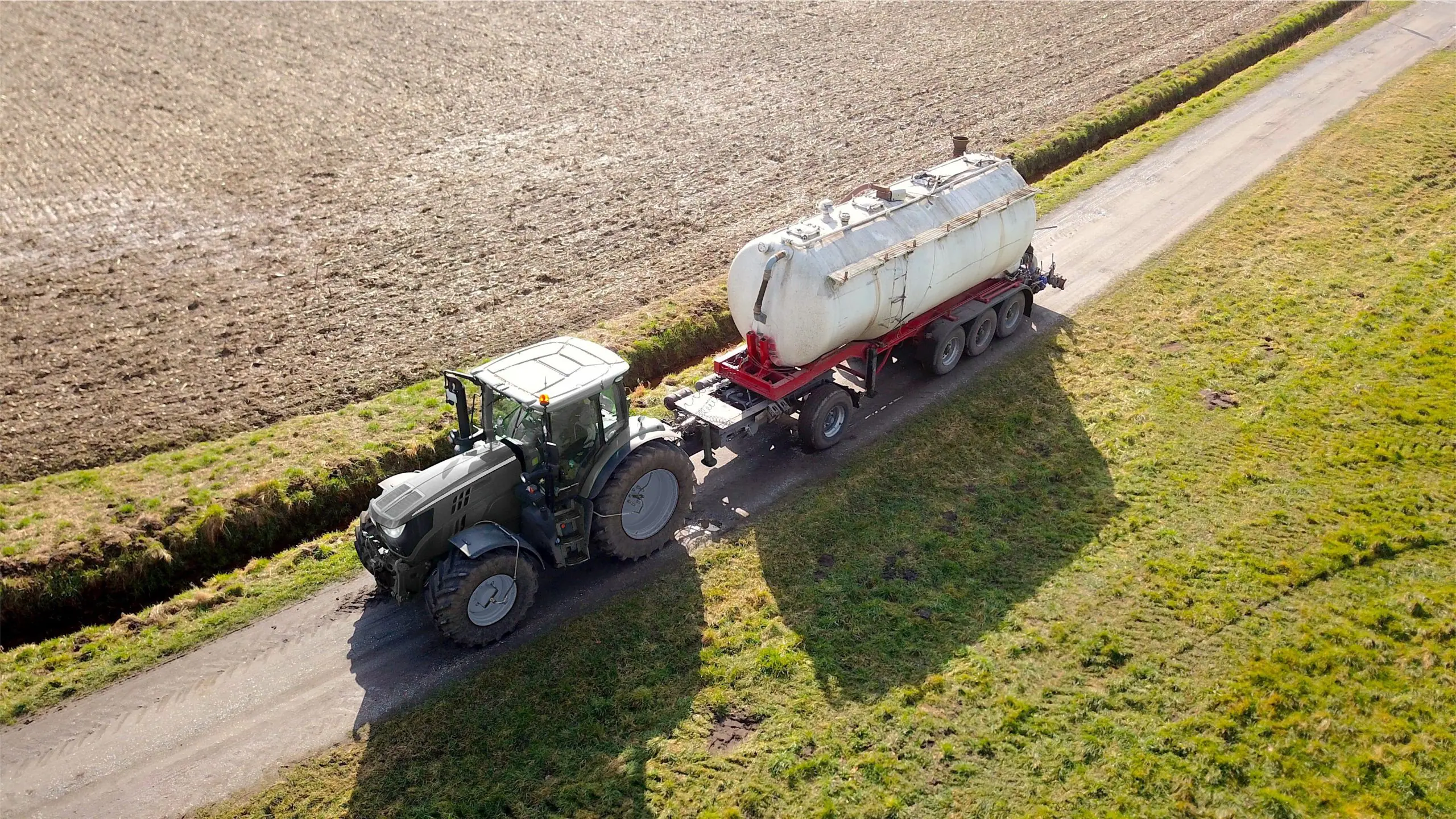
Transport
- Less volume means fewer journeys
(easing the burden on roads and the local community) - Fewer passes across the field thanks to
nutrients in concentrated form - The risk posed by weather conditions is reduced and the
efficiency of application is increased
Emissions
- 100% closed system
- Complete condensate treatment
- No odours
- No exhaust gases
- No noise (60 dB at 10 m)
- No particulate matter
- Exhaust gas recirculation: vacuum pump into the biogas plant’s gas system or activated carbon filter
Nutrient management
- Use of nitrogen fertiliser exceeding the 170 kg N limit
is possible - Very low N losses during storage and application
- Upgrading of the digestate into a transportable ammonium sulphate solution (farmAS®) and concentrated
fertiliser (farmLC®) - Fewer nitrogen losses due to ammonia emissions
in the field, thereby also reducing the need to purchase additional nitrogen - Improved nutrient management: nutrients can
be utilised much more effectively
and in a more targeted manner

Application / Fertilisation
- Optimal nutrient management
- Increased nutrient concentration:
→ Reduced risk from adverse weather conditions
→ Fewer journeys
→ Maximum efficiency - Nitrogen losses are very low
- Significant reduction in the need to purchase additional fertiliser
- Additional benefits from sulphur fertilisation
We’ll explain the Vapogant to you
factfeeder
Use the digestate from your biogas plant to produce a high-quality mineral fertiliser! We’ll explain how the Vapogant optimally processes and refines your digestate.
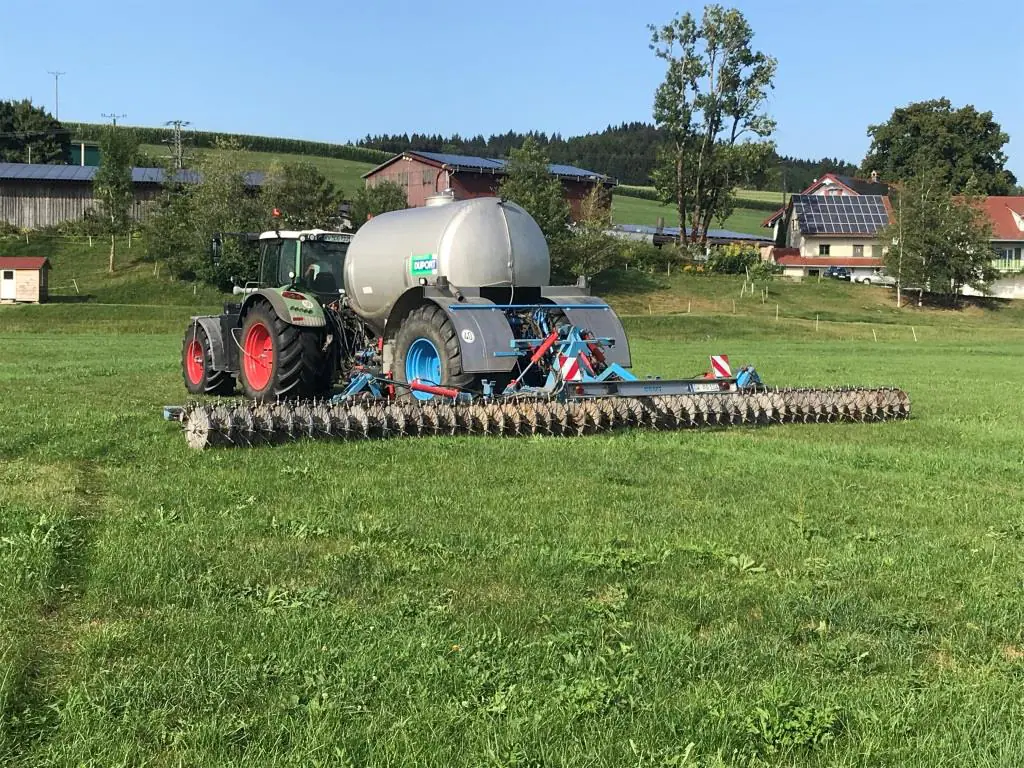
Application (Cultan method) for Form AS
The ammonium sulphate recovered from the digestate evaporation plant can be processed in various ways according to the customer’s requirements:
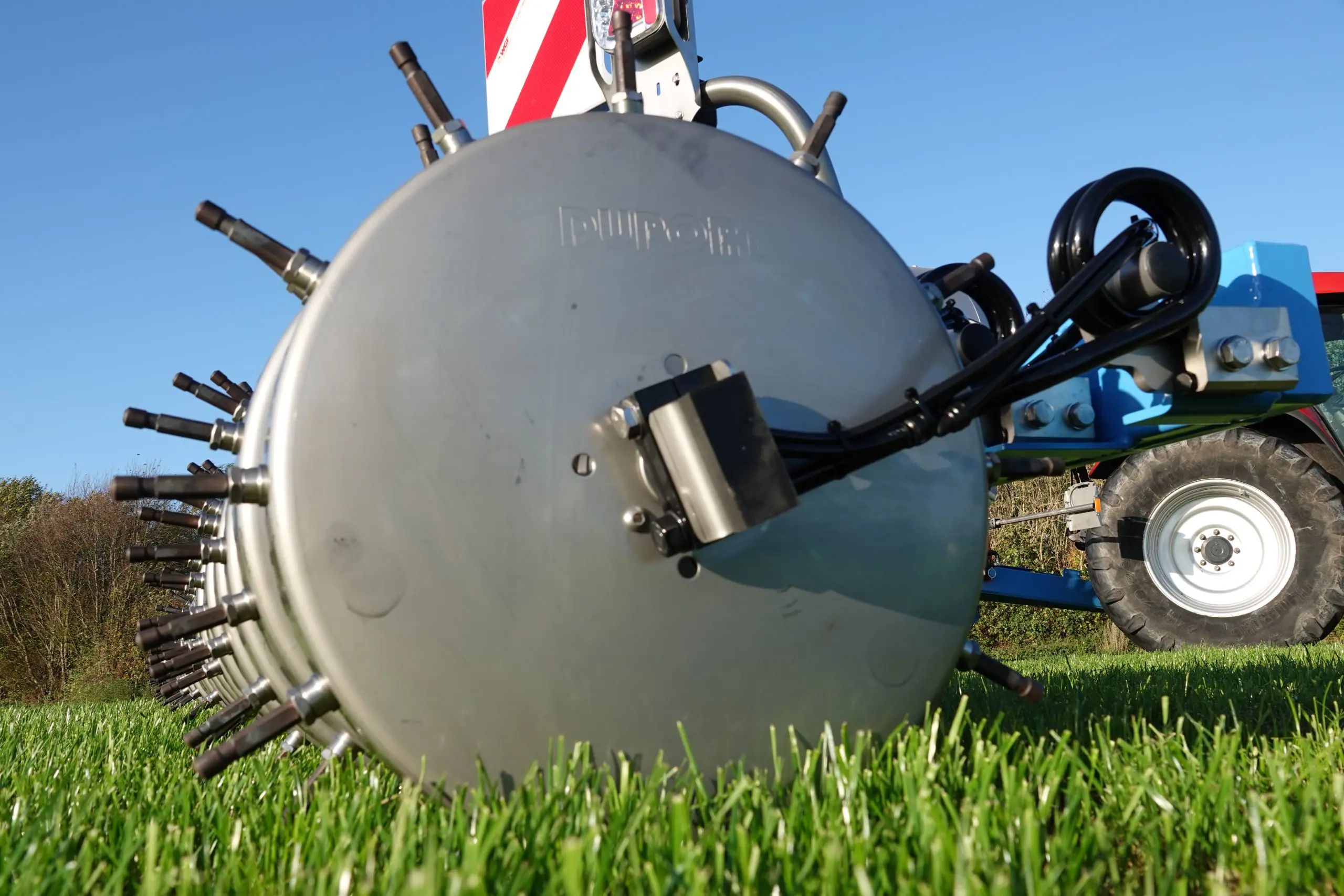
Direct dosing into the digestate
farmAS® is added directly to the digestate (thickened liquid fraction) during application.
Function of the deposit dispensing mechanism
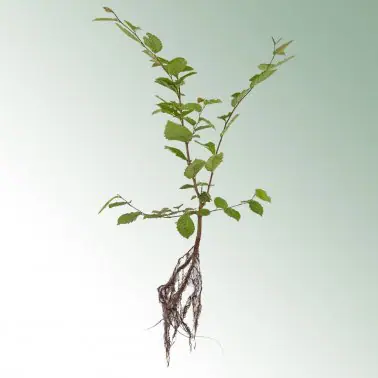
Supplying the root zone with the total nitrogen requirement
of a crop.
- Ammonium can be applied as and when required or as a slow-release fertiliser
- farmLC® can be applied regardless of the growth stage or crop
- Time-release fertilisation makes use of nutrients that were previously unavailable in the soil
Distillate utilisation
The distillate, which is separated from the evaporation process and purified using a vapour scrubber, can be processed in various ways depending on the customer’s requirements:
Use of the distillate for operational purposes
There are various ways in which this water can be used on the farm: storing it for use as washing water for the stables and outdoor areas, as a diluent for plant protection products and liquid fertilisers, etc.
Evaporation of the distillate via the wet cooling tower
As a cooling unit is required to operate the plant, some of the water can also be evaporated continuously via a cooling tower. In addition, the cooled water is used as a cooling medium.
Indirect and direct introduction of the distillate
The water is continuously discharged into a receiving watercourse - where appropriate, in conjunction with an upstream distillate treatment module - or may be allowed to seep away.