Biogas is becoming increasingly important as a renewable energy source. But what exactly does this term mean? Biogas is a flammable mixture of gases produced during the anaerobic digestion of organic materials. It is producedin biogas plants and can be used in a variety of ways to generate energy, whether for producing electricity and heat or, after appropriate processing, as biomethane in the gas network. As a climate-friendly alternative to fossil fuels, biogas plays an important role in the energy transition.
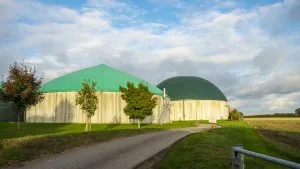 Biogas – what does it actually mean in practical terms? Put simply, it is ‘gas produced from biological waste’. Imagine how kitchen waste, farm manure or plant residues would normally rot away. This decomposition process produces gases that simply escape into the atmosphere. In a biogas plant, this natural process is controlled within a sealed container – the digester – and the resulting gas is captured.
The digester is the heart of every biogas plant. This airtight container provides optimal conditions for microorganisms: a constant temperature of between 35 and 55 degrees Celsius, no oxygen and a steady supply of substrate. The bacteria break down the organic materials step by step and convert them into biogas.
The gas produced can then be utilised in various ways:
Biogas – what does it actually mean in practical terms? Put simply, it is ‘gas produced from biological waste’. Imagine how kitchen waste, farm manure or plant residues would normally rot away. This decomposition process produces gases that simply escape into the atmosphere. In a biogas plant, this natural process is controlled within a sealed container – the digester – and the resulting gas is captured.
The digester is the heart of every biogas plant. This airtight container provides optimal conditions for microorganisms: a constant temperature of between 35 and 55 degrees Celsius, no oxygen and a steady supply of substrate. The bacteria break down the organic materials step by step and convert them into biogas.
The gas produced can then be utilised in various ways:
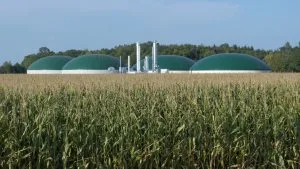 A modern biogas plant consists of several coordinated components which, together, ensure a continuous process:
Substrate storage and preparation:
Before the organic materials enter the digester, they are collected, shredded if necessary, and homogenised. Solid substrates such as silage are mixed with liquid components such as slurry to achieve a pumpable consistency. Modern feeding technology, such as the Easyfeeder systems from Biogastechnik Süd, ensures uniform and energy-efficient substrate dosing.
Fermenters (main digestion tanks):
The actual biogas production takes place in the fermenter. These gas-tight, mostly cylindrical tanks have a capacity ranging from a few hundred to several thousand cubic metres. A constant temperature is maintained by heating coils or tank heaters. Agitators – such as paddle agitators like the Varibull – ensure uniform mixing of the substrate, prevent the formation of floating layers and sediment, and guarantee optimum contact between bacteria and nutrients.
Secondary fermenter:
Following primary fermentation, the material enters a secondary fermenter, where any remaining gas potential is utilised during a longer retention time. Here too, the material is agitated and heated, although less intensively than in the primary fermenter.
Gas storage:
The biogas produced is collected in gas storage tanks – either in foil roofs directly on top of the digesters (air-supported roofs) or in separate gas storage tanks. This allows the gas to be stored and drawn off as required.
Gas processing:
Before the biogas can be used, impurities such as hydrogen sulphide must be removed to prevent corrosion. For injection into the natural gas grid or use as a fuel, more complex processing into biomethane is required: During this process, CO₂ is separated, resulting in a methane content of over 96 per cent.
Digestate storage:
The fully digested material (digestate) is a high-quality organic fertiliser. It is temporarily stored in digestate storage facilities and can be applied to agricultural land in accordance with the Fertiliser Ordinance. Separation technology such as the Sepogant from Biogastechnik Süd separates the digestate into liquid and solid phases, which facilitates transport and storage.
A modern biogas plant consists of several coordinated components which, together, ensure a continuous process:
Substrate storage and preparation:
Before the organic materials enter the digester, they are collected, shredded if necessary, and homogenised. Solid substrates such as silage are mixed with liquid components such as slurry to achieve a pumpable consistency. Modern feeding technology, such as the Easyfeeder systems from Biogastechnik Süd, ensures uniform and energy-efficient substrate dosing.
Fermenters (main digestion tanks):
The actual biogas production takes place in the fermenter. These gas-tight, mostly cylindrical tanks have a capacity ranging from a few hundred to several thousand cubic metres. A constant temperature is maintained by heating coils or tank heaters. Agitators – such as paddle agitators like the Varibull – ensure uniform mixing of the substrate, prevent the formation of floating layers and sediment, and guarantee optimum contact between bacteria and nutrients.
Secondary fermenter:
Following primary fermentation, the material enters a secondary fermenter, where any remaining gas potential is utilised during a longer retention time. Here too, the material is agitated and heated, although less intensively than in the primary fermenter.
Gas storage:
The biogas produced is collected in gas storage tanks – either in foil roofs directly on top of the digesters (air-supported roofs) or in separate gas storage tanks. This allows the gas to be stored and drawn off as required.
Gas processing:
Before the biogas can be used, impurities such as hydrogen sulphide must be removed to prevent corrosion. For injection into the natural gas grid or use as a fuel, more complex processing into biomethane is required: During this process, CO₂ is separated, resulting in a methane content of over 96 per cent.
Digestate storage:
The fully digested material (digestate) is a high-quality organic fertiliser. It is temporarily stored in digestate storage facilities and can be applied to agricultural land in accordance with the Fertiliser Ordinance. Separation technology such as the Sepogant from Biogastechnik Süd separates the digestate into liquid and solid phases, which facilitates transport and storage.
 The terms biogas, biomethane and natural gas are often confused. However, there are important differences:
Biogas:
Raw biogas straight from the digester contains around 50 – 75 per cent methane, 25 – 45 per cent CO₂, as well as hydrogen sulphide, water vapour and other trace gases. It can be burnt in this form in combined heat and power (CHP) plants, but is not suitable for injection into the gas grid.
Biomethane:
Processed and purified biogas with a methane content of over 96 per cent. Its quality is equivalent to that of natural gas and it can be fed into the gas network or used as a fuel. The term ‘bio-natural gas’ is used synonymously.
Natural gas:
A fossil fuel formed millions of years ago from organic material under high pressure and at high temperatures. It consists mainly of methane (>80 per cent) and is extracted from underground deposits. When burned, it releases fossil CO₂, which is added to the atmosphere.
The key advantage of biogas and biomethane is that they are renewable and climate-neutral, whereas natural gas increases the concentration of CO₂ in the atmosphere.
The terms biogas, biomethane and natural gas are often confused. However, there are important differences:
Biogas:
Raw biogas straight from the digester contains around 50 – 75 per cent methane, 25 – 45 per cent CO₂, as well as hydrogen sulphide, water vapour and other trace gases. It can be burnt in this form in combined heat and power (CHP) plants, but is not suitable for injection into the gas grid.
Biomethane:
Processed and purified biogas with a methane content of over 96 per cent. Its quality is equivalent to that of natural gas and it can be fed into the gas network or used as a fuel. The term ‘bio-natural gas’ is used synonymously.
Natural gas:
A fossil fuel formed millions of years ago from organic material under high pressure and at high temperatures. It consists mainly of methane (>80 per cent) and is extracted from underground deposits. When burned, it releases fossil CO₂, which is added to the atmosphere.
The key advantage of biogas and biomethane is that they are renewable and climate-neutral, whereas natural gas increases the concentration of CO₂ in the atmosphere.
Definition of biogas: What is biogas?
The definition of biogas can be formulated precisely: biogas is a mixture of various gases produced by the microbial breakdown of organic substances under anaerobic conditions – that is, in the absence of oxygen. Its chemical composition consists mainly of methane (CH₄) and carbon dioxide (CO₂), with methane constituting the high-energy, combustible component. In a scientific context, biogas is referred to as the product of anaerobic fermentation. This biological process occurs naturally in moors, marshes or in the digestive tracts of ruminants. In biogas plants, this natural process is technically optimised and carried out under controlled conditions in order to generate energy in a targeted manner. Legally, biogas is enshrined in Germany’s Renewable Energy Sources Act (EEG) and is classified as a biogenic energy source. It is classified as a renewable energy source because the raw materials used are renewable, and when burned, only as much CO₂ is released as the plants previously absorbed from the atmosphere – a closed carbon cycle.Biogas – what is it? The basics explained in simple terms
Biogas – what does it actually mean in practical terms? Put simply, it is ‘gas produced from biological waste’. Imagine how kitchen waste, farm manure or plant residues would normally rot away. This decomposition process produces gases that simply escape into the atmosphere. In a biogas plant, this natural process is controlled within a sealed container – the digester – and the resulting gas is captured.
The digester is the heart of every biogas plant. This airtight container provides optimal conditions for microorganisms: a constant temperature of between 35 and 55 degrees Celsius, no oxygen and a steady supply of substrate. The bacteria break down the organic materials step by step and convert them into biogas.
The gas produced can then be utilised in various ways:
- Directly on-site in a combined heat and power (CHP) plant for the combined generation of electricity and heat
- Fed into the natural gas grid as biomethane after processing
- Used as fuel for vehicles
- Used for heat generation alone in boilers
What is biogas, explained simply? The process step by step
What is biogas, explained simply, when you look at the entire production process? Think of a closed cycle that takes place in several successive phases: Phase 1: Hydrolysis The first stage begins with the breakdown of complex organic molecules. Carbohydrates, proteins and fats are broken down by enzymes into smaller building blocks: sugars, amino acids and fatty acids. This step is comparable to digestion in the human body. Phase 2: Acidogenesis (acid formation) The broken-down molecules are further degraded by acid-producing bacteria. This produces short-chain organic acids such as acetic, propionic and butyric acids, as well as alcohols, hydrogen and carbon dioxide. During this phase, the pH value in the fermenter drops slightly. Phase 3: Acetogenesis (acetic acid formation) Acetogenic bacteria convert the resulting acids and alcohols into acetic acid, hydrogen and carbon dioxide. These compounds are the direct precursors for methane formation. Phase 4: Methanogenesis (methane formation) In the final step, methane-producing microorganisms (archaea) produce energy-rich methane from acetic acid, hydrogen and carbon dioxide. These microbes are very sensitive and require stable conditions. They are the reason why the process must take place in the absence of oxygen. Depending on the substrate and temperature, the retention time of the material in the digester is between 20 and 80 days. During this time, biogas is produced continuously and is extracted via a gas pipeline and stored.Composition of biogas: What gases does it contain?
The composition of biogas varies depending on the raw materials used, but can be specified within typical ranges: Main components:- Methane (CH₄): 50 – 75% by volume – the component with the highest energy value
- Carbon dioxide (CO₂): 25 – 45% by volume – non-flammable; must be separated for higher-value applications
- Water vapour (H₂O): 1 – 5% by volume – depending on the temperature of the gas
- Nitrogen (N₂): 0 – 5% by volume – enters the process through leaks or with the feedstock
- Oxygen (O₂): 0 – 2 vol.% – should be avoided where possible
- Hydrogen sulphide (H₂S): 0.01 – 2 vol.% – corrosive, must be removed before use
- Ammonia (NH₃): traces – formed when processing protein-rich substrates
- Hydrogen (H₂): < 1 vol.% – an intermediate product in the degradation process
Feedstocks for biogas production
The variety of substrates that can be used makes biogas particularly versatile. In principle, any organic material containing carbon can be fermented. In practice, a distinction is made between the following groups of materials: Renewable raw materials (NawaRo):- Energy crops such as maize, cereals, grasses and sugar beet
- Grown specifically for energy production
- High methane yields per hectare
- Predictable availability and consistent quality
- Slurry from cattle, pigs or poultry
- Solid manure from livestock farming
- Produced continuously on agricultural holdings
- Helps to reduce emissions, as methane is not released uncontrollably into the atmosphere
- Biowaste from households and local authorities
- Food waste from the catering sector and food industry
- Residues from food processing (grain husks, distiller’s grains, whey)
- Garden waste and material from landscape maintenance
- Sewage sludge from municipal sewage treatment works
- Algae and aquatic plants
- Straw and other crop residues
- Organic industrial waste
The process in the biogas plant: from biomass to usable gas
A modern biogas plant consists of several coordinated components which, together, ensure a continuous process:
Substrate storage and preparation:
Before the organic materials enter the digester, they are collected, shredded if necessary, and homogenised. Solid substrates such as silage are mixed with liquid components such as slurry to achieve a pumpable consistency. Modern feeding technology, such as the Easyfeeder systems from Biogastechnik Süd, ensures uniform and energy-efficient substrate dosing.
Fermenters (main digestion tanks):
The actual biogas production takes place in the fermenter. These gas-tight, mostly cylindrical tanks have a capacity ranging from a few hundred to several thousand cubic metres. A constant temperature is maintained by heating coils or tank heaters. Agitators – such as paddle agitators like the Varibull – ensure uniform mixing of the substrate, prevent the formation of floating layers and sediment, and guarantee optimum contact between bacteria and nutrients.
Secondary fermenter:
Following primary fermentation, the material enters a secondary fermenter, where any remaining gas potential is utilised during a longer retention time. Here too, the material is agitated and heated, although less intensively than in the primary fermenter.
Gas storage:
The biogas produced is collected in gas storage tanks – either in foil roofs directly on top of the digesters (air-supported roofs) or in separate gas storage tanks. This allows the gas to be stored and drawn off as required.
Gas processing:
Before the biogas can be used, impurities such as hydrogen sulphide must be removed to prevent corrosion. For injection into the natural gas grid or use as a fuel, more complex processing into biomethane is required: During this process, CO₂ is separated, resulting in a methane content of over 96 per cent.
Digestate storage:
The fully digested material (digestate) is a high-quality organic fertiliser. It is temporarily stored in digestate storage facilities and can be applied to agricultural land in accordance with the Fertiliser Ordinance. Separation technology such as the Sepogant from Biogastechnik Süd separates the digestate into liquid and solid phases, which facilitates transport and storage.
Advantages and benefits of biogas as an energy source
Biogas offers numerous advantages over fossil fuels and other renewable energy sources: Climate protection: When biogas is combusted, only as much CO₂ is released as the plants absorbed during their growth. Furthermore, the use of manure and organic waste prevents methane emissions that would otherwise occur during open storage. Methane is around 25 times more harmful to the climate than CO₂. Energy independence: Biogas can be produced regionally and reduces dependence on imported fossil fuels. Agricultural businesses can generate their own energy and become energy producers. Base-load capability: Unlike wind and solar energy, biogas can be stored and its availability planned for. Biogas plants can generate electricity in line with demand, thereby stabilising the electricity grid – which is particularly important when integrating volatile renewable energy sources. Nutrient cycle: The digestate contains all the essential plant nutrients and is more readily available to plants than unfermented slurry. A higher proportion of the nitrogen is present in mineral form, which means that chemical fertilisers can be saved. Emissions reduction: Modern biogas plants are closed systems that significantly reduce odour nuisance caused by slurry storage. Ammonia and methane emissions are minimised. Economic prospects: Biogas plants generate added value in rural areas, secure agricultural incomes and create jobs. Operators benefit from stable feed-in tariffs and tap into additional sources of income.Possible uses: How is biogas used?
Biogas has a wide range of uses, depending on its purity and local conditions: Combined heat and power (CHP): The most common application is the simultaneous generation of electricity and heat in combined heat and power (CHP) units. A gas engine drives a generator to produce electricity, whilst the engine’s waste heat is used for heating purposes. The electricity is fed into the public grid, whilst the heat is used to heat the digesters as well as nearby buildings, greenhouses or drying facilities. The electrical efficiency is around 35 – 40 per cent, whilst the overall efficiency exceeds 85 per cent. Biomethane injection: Once processed into biomethane, the gas can be injected into the natural gas network. It is then available to all natural gas customers and can be used flexibly – from heating and industrial processes to electricity generation in gas-fired power stations. Vehicle fuel: Processed biomethane (Bio-CNG) can be used as a climate-friendly fuel for natural gas-powered vehicles. Gas-powered buses, lorries and cars can run on it in a virtually carbon-neutral manner. In some regions, there are already filling stations offering biomethane. Heating: In gas heating systems, biogas or biomethane can replace conventional natural gas and provide buildings with heat in a climate-friendly way. This is particularly efficient in local heating networks that supply multiple consumers. Industrial applications: Some industrial plants use biogas directly in production processes, for example in the ceramics industry, food processing or the chemical industry.The difference between biogas, biomethane and natural gas
The terms biogas, biomethane and natural gas are often confused. However, there are important differences:
Biogas:
Raw biogas straight from the digester contains around 50 – 75 per cent methane, 25 – 45 per cent CO₂, as well as hydrogen sulphide, water vapour and other trace gases. It can be burnt in this form in combined heat and power (CHP) plants, but is not suitable for injection into the gas grid.
Biomethane:
Processed and purified biogas with a methane content of over 96 per cent. Its quality is equivalent to that of natural gas and it can be fed into the gas network or used as a fuel. The term ‘bio-natural gas’ is used synonymously.
Natural gas:
A fossil fuel formed millions of years ago from organic material under high pressure and at high temperatures. It consists mainly of methane (>80 per cent) and is extracted from underground deposits. When burned, it releases fossil CO₂, which is added to the atmosphere.
The key advantage of biogas and biomethane is that they are renewable and climate-neutral, whereas natural gas increases the concentration of CO₂ in the atmosphere.